Second annual Imagine360 survey shows cost crisis deepening: nearly 90% say healthcare is too expensive, and nearly half skip care due to cost
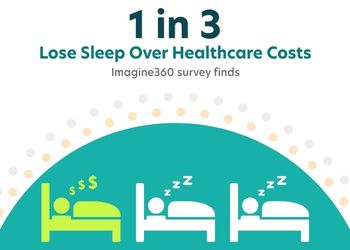
A new national survey from Imagine360, a leading alternative health plan for self-funded employers, reveals a rising healthcare affordability crisis with 1 in 3 insured Americans saying they’re losing sleep over the cost of care. As employer-sponsored healthcare costs climb to record highs, nearly half (44%) of survey respondents are skipping or delaying needed treatment.
“Healthcare affordability has reached a crisis point,” said Jeff Bak, CEO and president, Imagine360. “This isn’t just a financial issue; it’s a public health emergency when people are losing sleep or skipping care over costs. Both families and employers are at a breaking point. The current state of U.S. healthcare costs is not sustainable and demands that we reassess how it’s administered, delivered and paid for.”
Now in its second year, Imagine360’s survey, conducted by Pollfish, surveyed 2,500 insured adults, with nearly all saying healthcare is too expensive. Approximately 36% reported a household income at or below the U.S. median of $83,730 and 80% receive healthcare coverage through an employer. The representative sample spans the United States: South (39%), Northeast (24%), Midwest (24%), and West (13%).
Key findings include:
- Healthcare Cost Perception: nearly 90% of Americans believe healthcare costs are excessive, with 36% saying affordability concerns have kept them up at night.
- Care Avoidance: 44% of respondents skipped or postponed necessary healthcare or medications due to cost, up from 38% in 2025. Nearly half (45%) of those individuals reported their medical conditions worsened as a result.
- Employment Impact: 40% of respondents would accept a 10% pay cut if it meant more affordable health benefits, and 74% say health plan benefits significantly influence their job choices.
With the average annual cost of employer‑sponsored family health coverage nearing $27,000, affordability is becoming an increasing concern for both businesses and working families. Employer healthcare costs are predicted to rise at nearly double‑digit rates in 2026, and for the roughly 60% of Americans who rely on coverage through their employer, those increases have a direct and meaningful impact on financial well‑being. The survey’s results underscore the importance of employers understanding employee health and financial needs, and potential business impacts.
Healthcare Cost Crisis: Health & Economic Toll
The survey’s stark reality: 44% of respondents skipped or delayed necessary healthcare or medications due to cost—a six-point increase from 2025. Nearly half (45%) of those individuals reported that their health worsened as a result. In other words, rising healthcare costs are directly contributing to worse health outcomes for roughly one in five Americans.
The mental toll is equally alarming with 36% of respondents saying that worrying about healthcare affordability has kept them up at night within the past year. This lack of quality sleep not only diminishes emotional well-being, but exacerbates productivity losses, absenteeism, and chronic disease risks. The Integrated Benefits Institute estimates that this costs U.S. employers nearly $3,000 per employee annually.
Health Benefits Overtake Pay in Job Decisions
A seismic workplace shift is underway with 74% of respondents saying health plan benefits are a major factor when it comes to choosing or remaining with an employer—an increase from 66% in 2025. Remarkably, 40% would willingly accept a 10% pay cut in exchange for more affordable healthcare coverage through their employer. This increases to 45% among millennials and Gen Z who now comprise over half of the U.S. workforce, signifying the growing urgency for U.S. employers to rethink their healthcare benefits strategy.
Employers Reassess Traditional Health Plans in Face of Unsustainable Cost Increases
With nearly two-thirds of survey respondents saying they do not believe the quality of healthcare matches its cost, employers are reassessing how healthcare benefits are structured and financed. According to the Business Group on Health, a majority of employers expect to explore alternative health plans by 2028, reflecting broader concern about long‑term affordability and sustainability.
Independent analyses suggest that alternative health plan models can materially reduce healthcare spending compared to conventional approaches. Recent actuarial findings show that models incorporating reference-based pricing and provider contracting strategies have the potential to lower overall costs by nearly 20% while maintaining access to care.
Learn more about the Imagine360 healthcare cost survey here.
About Imagine360
Imagine360 is an integrated health plan addressing some of the greatest challenges on behalf of self-funded employers: healthcare costs are harming the bottom line, increasingly unaffordable for employees, and the experience remains poor. Imagine360’s innovative payment model includes preferential contracting with providers and health systems, and additional price protection through reference-based pricing, saving employers 15-30% on average compared to the national carriers. With nearly 20 years’ experience, Imagine360 offers care coordination and medical management to proactively guide members through the complexities of healthcare. Learn more at www.imagine360.com and connect with us on LinkedIn.